
The Argument Against Getting Better
Everyone arrives with a project. It is rarely stated as one, but it is there in the first conversation, sitting just underneath whatever gets said out loud. To be stronger. To fix the back. To stand differently. To become, within a reasonable timeframe, a slightly improved edition of the person currently signing up.
This is entirely fine and it is usually what gets somebody through the door. A practice needs a reason at the beginning, and improvement is the most available one.
The interesting thing is what happens to that reason after a year or so.
It does not survive. Not because it fails, but because it is largely fulfilled and turns out to have been the wrong frame anyway. Somewhere in the second year the roll down that was once impossible becomes ordinary. The back that was the original complaint stops being the reason for anything. The improvements arrive, get absorbed, and stop being noticeable within about a fortnight of arriving, which is how the mind treats every improvement it has ever received.
At that point the project runs out. And this is the moment where most people quietly stop, because a practice built entirely on getting better has no answer to the question of what happens once you have.
The ones who keep going have usually made a switch, and most of them could not tell you when.
They stopped coming to improve and started coming because Tuesday is the day they come.
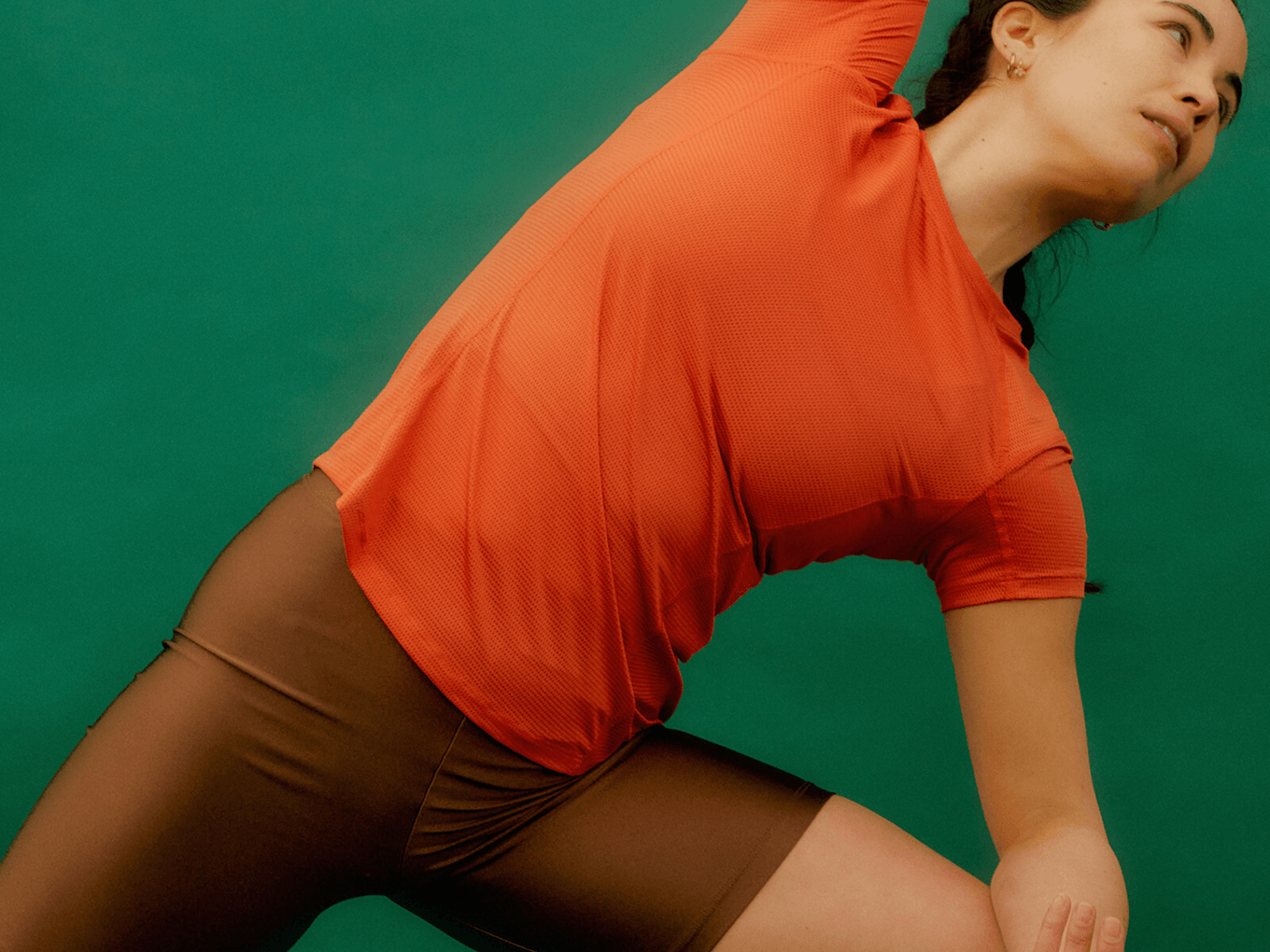
This sounds like a demotion. It is closer to the opposite. A practice organised around progress is permanently in deficit, because progress is a comparison and the comparison always has somewhere further to point. There is a better version of the movement, a deeper version of the shape, a person on the next mat doing something you cannot yet do. Measured against that, no hour is ever quite enough, and the whole thing carries a low hum of insufficiency that never resolves no matter how much better anyone gets.
A practice organised around attendance has no such problem. You came. That was the requirement. Whatever the body offered up today was the material, and the material varies, and varying is not failure.
What changes, once the project has been set down, is the texture of the hour itself.
The person still working on getting better spends the class in assessment. Is this working, is it enough, is it the same as last week, was that shape as good as the one before it. They are, in a real sense, not in the room. They are in a comparison, and the body is only there to supply evidence for it.
The person who has stopped is doing something stranger and much more difficult. They are simply finding out what today is like. Some Tuesdays the hip is generous. Some Tuesdays it is not and the class becomes about working around it. Some Tuesdays the mind will not settle and the whole hour is spent gently retrieving it from wherever it has gone, which is not a wasted class but a different kind of one.
None of that can be graded. All of it is the practice.
There is a version of this idea that goes too far, and it is worth naming so as not to be accused of it. Nobody is arguing for indifference or for the abandonment of effort. The corrections still matter. The instructor still expects the shoulder down and the ribs closed, and the work is still work, done at an intensity that would embarrass anyone who thinks this is a soft option. Precision is not in tension with any of this. Precision is what the attention is for.

The claim is narrower. It is that improvement is a consequence rather than a purpose, and that practices built on the consequence tend not to last, while practices built on the doing tend to produce the consequence anyway, as a sort of side effect nobody was watching for.
Which is the small joke at the centre of it. The people who improve most in the long run are almost always the ones who stopped organising their practice around improving, because they are the only ones still there in year five.
You can see it in a room. There is a particular quality to someone who has been doing this a long time and has nothing to prove in the hour, no target attached to the class, no verdict waiting at the end of it. They are unhurried in a way that is not slowness. They take the modification without any weather around the decision. They are, by a wide margin, the strongest people on the floor, and it has stopped being the point.
That is what a practice looks like once it is no longer a project. Not a lower ambition. A longer one.
.png)

.png)