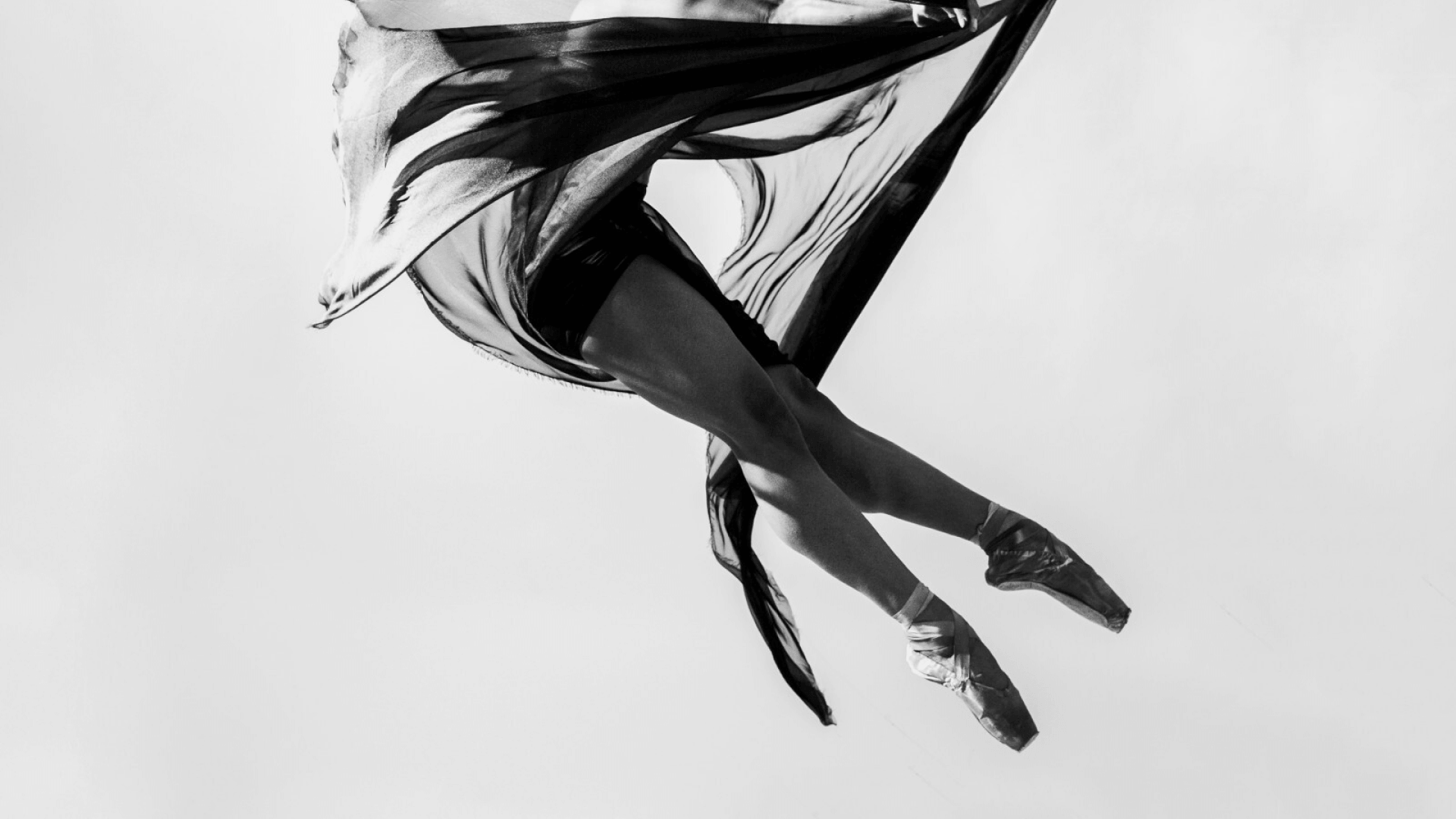
The ballerina's secret: barre for form, Pilates for control
Watch a dancer enter a room and you will notice, before anything else, what she does with her spine. It rises.
This is not posture in the way most people mean the word. It is the visible residue of thousands of hours spent teaching a body exactly where it is, and where it is going, at all times.
A professional dancer visited a Pilates studio recently and joined a class. What followed was not a formality. She moved through the exercises with the kind of quiet precision that made the rest of the room look, briefly, like it was moving in slow motion. Nothing about it was showy. It didn’t need to be.
It raised an obvious question. If someone has already spent a lifetime training the body through ballet, why would Barre or Pilates matter at all?
The answer says less about ballet and more about what these two disciplines are actually built to do, and it explains why so many dancers train in both long after they’ve left the stage.
Barre Builds the Shape
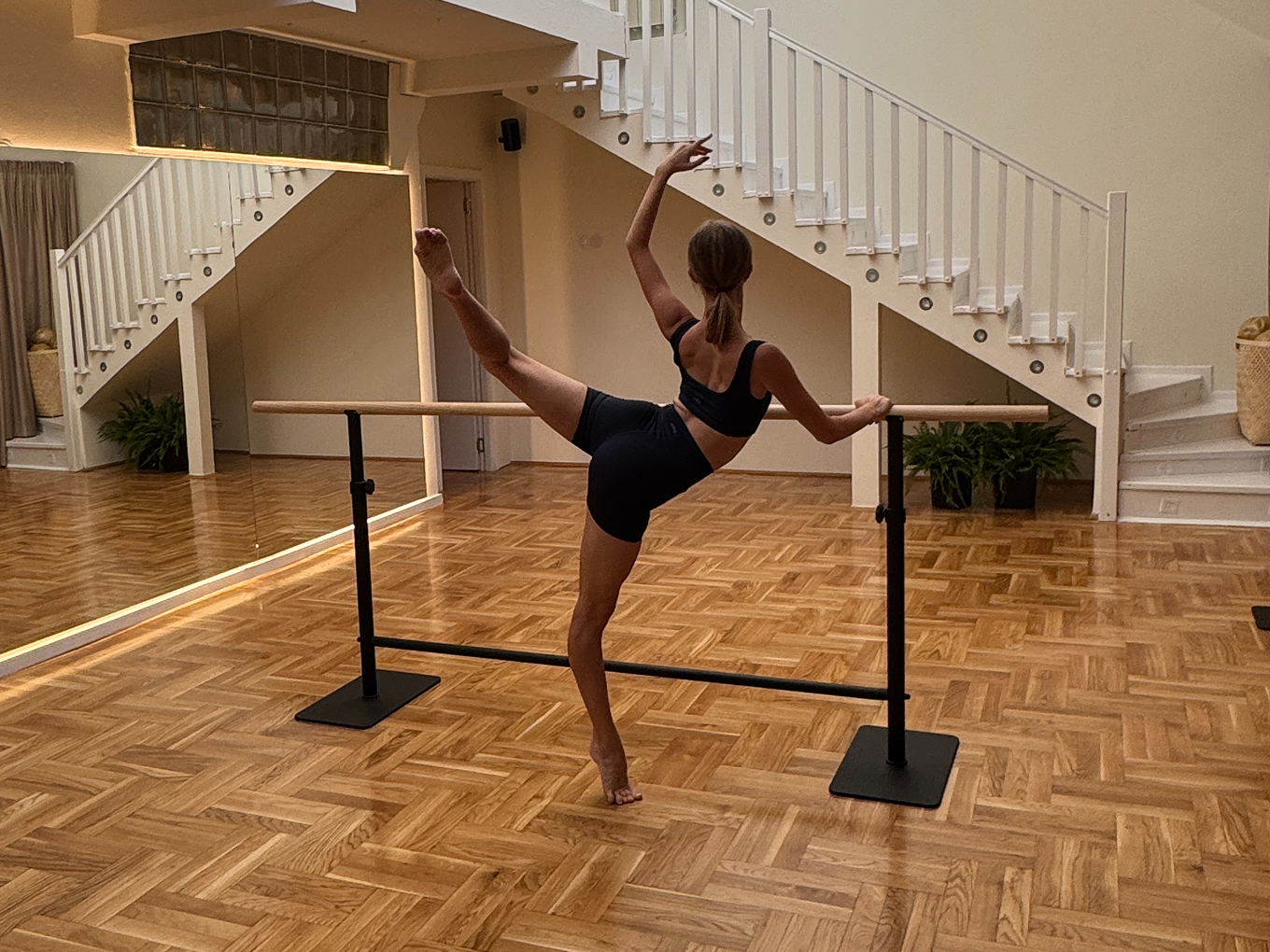
Barre exists because of ballet, not the other way around. The isometric holds, the small pulsing movements, the obsessive attention to alignment through the hips, spine, and shoulders, all of it descends directly from the ballet studio. Barre isolates the exact positions a dancer spends years refining and asks the muscles to hold them under sustained, low-range tension.
This is why Barre classes feel deceptively hard. The movements are small. The range of motion is often just a few inches. But that narrow range is where postural endurance actually gets built. The body isn’t being asked to move far. It’s being asked to hold, and hold, and hold, until the muscles responsible for shape and alignment have no choice but to engage.
For a dancer, this is familiar territory. For everyone else, it’s often the first time those stabilizing muscles have ever been asked to work this directly.
Pilates Builds the Control
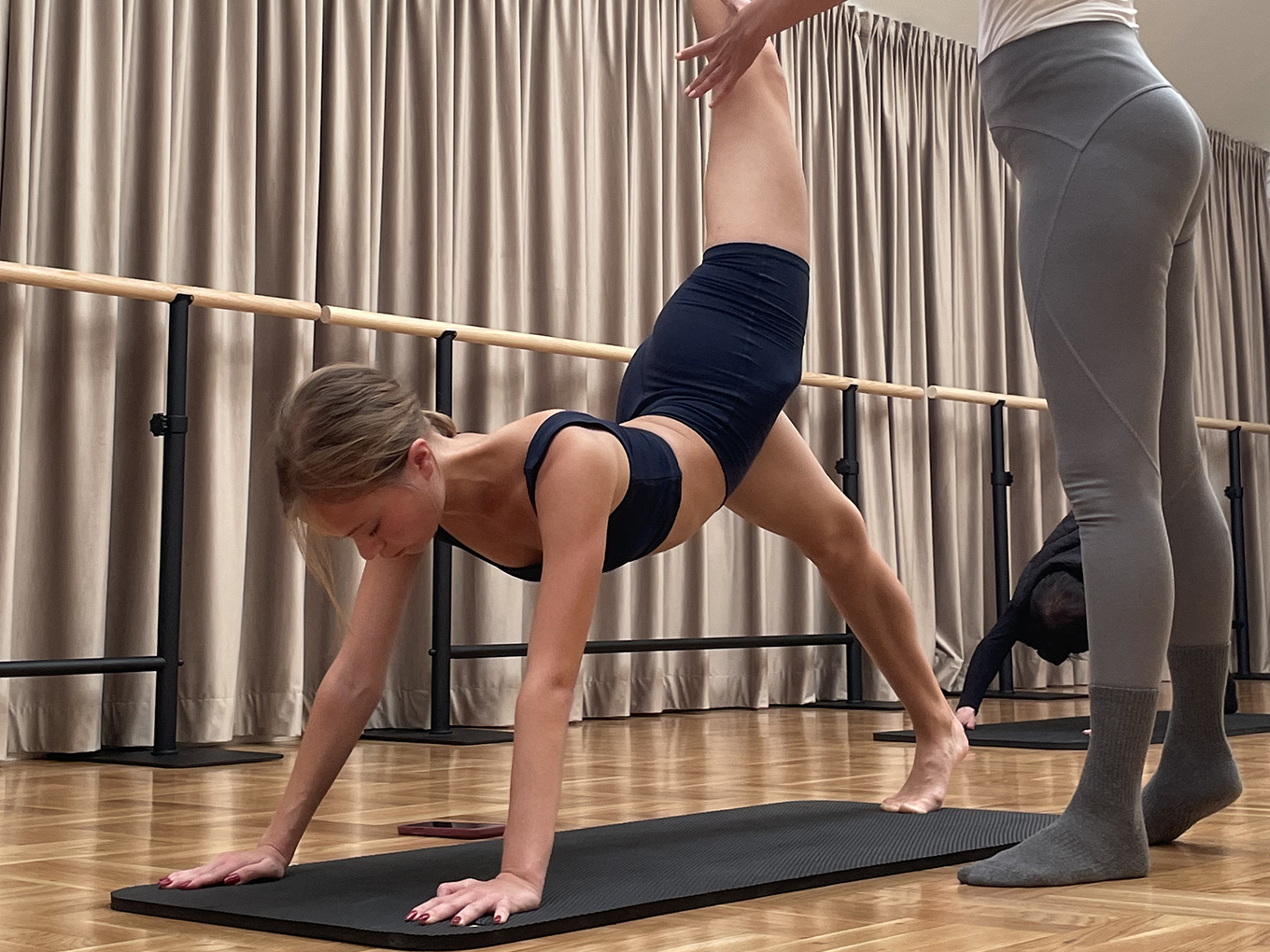
Where Barre trains shape, Pilates trains the relationship between breath, core, and movement. It’s the discipline behind the discipline. A dancer’s extension, balance, and turnout don’t come from flexibility alone. They come from a deep, coordinated core that can control the body through slow, deliberate ranges of motion.
This is precisely what Pilates was designed to do. Joseph Pilates originally called his method “Contrology,” a term that gets closer to the point than “Pilates” ever has. Every exercise is an exercise in control: controlling the spine as it moves through flexion and extension, controlling the limbs as they extend away from a stable center, controlling the breath so it powers the movement instead of interrupting it.
This is also why a ballerina walking into a Pilates class doesn’t find it easy. The movements might look simple. Under a body that already understands alignment, they become an exercise in finding an even deeper layer of control, the kind that lives underneath the shapes she’s already mastered.
Two Different Jobs, One Shared Origin
Barre and Pilates are often grouped together, and it’s easy to see why. Both are low-impact. Both are precise. Both borrow heavily from dance vocabulary. But they are not solving the same problem.
Barre is concerned with form: the line of the body, the height of a lift, the position of the hips relative to the spine. Pilates is concerned with control: the sequencing of muscles, the stability of the core, the quality of movement from the inside out.
A dancer needs both, which is exactly why so many professional dance companies build both into their off-season training. Barre keeps the postural muscles that create a dancer’s silhouette switched on. Pilates keeps the deep core, the one that actually protects the spine and joints during high-impact movement, doing its job.
What This Means for Everyone Else
Most people who take a Barre or Pilates class will never dance a single step of choreography. That’s not really the point. The point is that the body doesn’t know the difference between a dancer’s spine and anyone else’s. The same muscles that hold a dancer’s posture are the ones holding everyone else’s posture too, whether or not they’ve ever been trained to do it well.
That’s the real secret behind why dancers keep coming back to these two disciplines long after they’ve left performance behind. Barre and Pilates aren’t a warm-up for ballet. They are, in many ways, ballet’s unfinished business, the training that makes the shape possible and the control that makes it last.
.png)
.png)